
Is and are are forms of the verb “to be” used in English grammar to describe a state, condition, or identity. The main difference between is and are depends on whether the subject is singular or plural. “Is” is used with singular subjects, while “are” is used with plural subjects. These two words are very common in everyday English and are essential for forming correct sentences.
Understanding the difference between is and are is important for speaking and writing correct English. These verbs are used in present tense sentences and appear in questions, statements, and negative sentences. In this article, you will learn the rules, usage, examples, and common mistakes related to is and are, making it easier to use them correctly in any situation.
What Is “Is”?
“Is” is used with singular subjects such as one person, one thing, or one idea. It shows that something exists or describes a condition.
Examples of “Is”
- He is happy
- She is a teacher
- The book is on the table
- It is raining
When to Use “Is”
Use “is” when the subject is:
- Singular noun (dog, boy, car)
- Singular pronoun (he, she, it)
- One person or thing
What Is “Are”?
“Are” is used with plural subjects such as more than one person, thing, or idea.
Examples of “Are”
- They are happy
- We are students
- The books are on the table
- The dogs are barking
When to Use “Are”
Use “are” when the subject is:
- Plural noun (dogs, people, cars)
- Plural pronoun (they, we, you)
- More than one person or thing
Difference Between Is and Are
Here is a simple comparison:
| Word | Usage | Example |
| Is | Singular subject | She is happy |
| Are | Plural subject | They are happy |
Key Difference
- Is → One (singular)
- Are → Many (plural)
This is the basic rule for using is and are correctly.
Rules for Using Is and Are
Understanding the rules will help you avoid mistakes.
Rule 1: Singular vs Plural
- He is my friend
- They are my friends
Rule 2: With “You”
“You” always uses are, even if it refers to one person.
- You are my best friend
Rule 3: With There
- There is a cat on the roof
- There are two cats on the roof
Rule 4: With Uncountable Nouns
Use “is” with uncountable nouns.
- Water is important
- Sugar is sweet
Is or Are in Questions
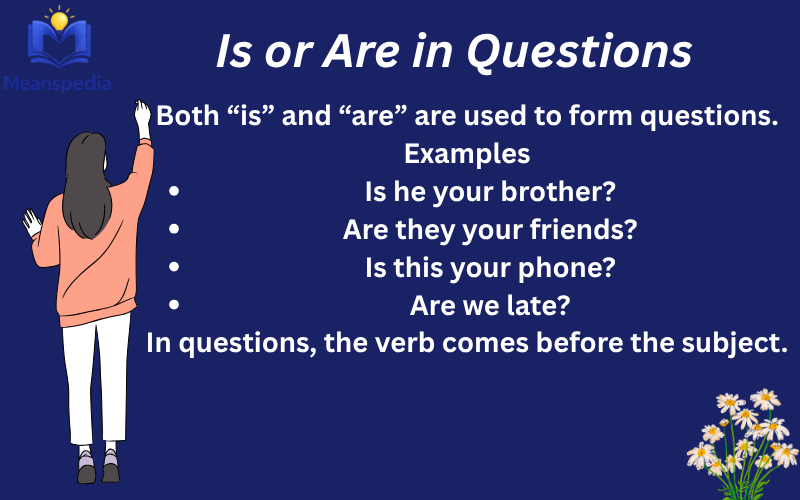
Both “is” and “are” are used to form questions.
Examples
- Is he your brother?
- Are they your friends?
- Is this your phone?
- Are we late?
In questions, the verb comes before the subject.
Is or Are in Negative Sentences
Negative sentences are formed using “not”.
Examples
- He is not happy
- They are not ready
- She is not at home
- We are not late
Short forms:
- Is not → isn’t
- Are not → aren’t
Common Mistakes with Is and Are
Many learners make simple mistakes.
Mistake 1
❌ They is happy
✅ They are happy
Mistake 2
❌ He are my friend
✅ He is my friend
Mistake 3
❌ The dogs is barking
✅ The dogs are barking
Avoid these mistakes by remembering singular vs plural rules.
Is or Are in Daily Conversation
These words are used in everyday English.
Examples
- The weather is nice
- The kids are playing
- She is tired
- They are working
Using them correctly improves communication.
Is or Are with Collective Nouns
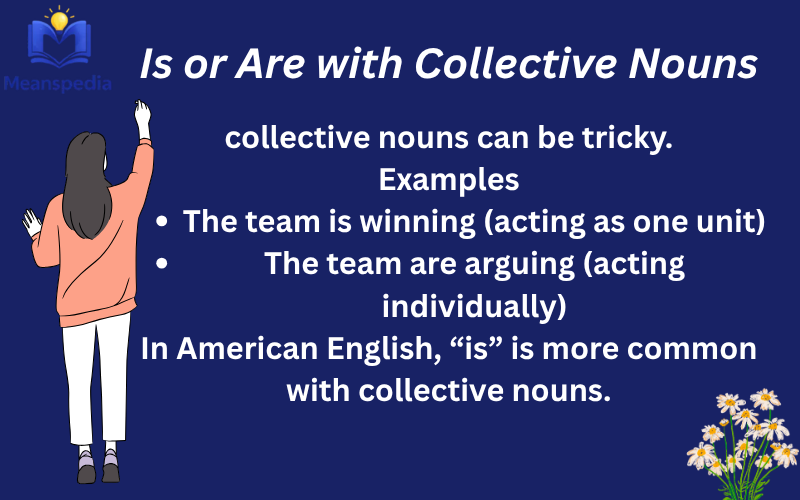
Collective nouns can be tricky.
Examples
- The team is winning (acting as one unit)
- The team are arguing (acting individually)
In American English, “is” is more common with collective nouns.
Is or Are with Numbers
Numbers can affect usage.
- One student is absent
- Two students are absent
Singular vs plural rule applies here as well.
Related Post: Felt vs Feel: Difference, Meaning, and How to Use Them
Is or Are with Pronouns
| Pronoun | Correct Form |
| He | Is |
| She | Is |
| It | Is |
| They | Are |
| We | Are |
| You | Are |
Is or Are in Different Contexts
School
- The teacher is explaining
- The students are listening
Home
- The food is ready
- The dishes are clean
Work
- The manager is busy
- The employees are working
Why Is It Important to Learn Is and Are?
Learning is and are helps you:
- Speak correct English
- Write proper sentences
- Avoid grammar mistakes
- Improve communication
- Build confidence
These are basic but very important grammar rules.
Tips to Remember Is vs Are
Easy Tips
- One → is
- Many → are
- You → always are
- Uncountable → is
Practice these rules daily.
Examples of Is and Are in Sentences
| Sentence | Explanation |
| The cat is sleeping | One cat |
| The cats are sleeping | More than one cat |
| She is my friend | Singular |
| They are my friends | Plural |
FAQs
What is the difference between is and are?
“Is” is used for singular subjects, while “are” is used for plural subjects.
When should I use “is”?
Use “is” with one person, thing, or idea.
When should I use “are”?
Use “are” with more than one person or thing.
Is “you” singular or plural?
“You” can be both, but it always uses “are”.
Can I use “is” with plural nouns?
No, plural nouns always use “are”.
Is “water is” correct?
Yes, because water is uncountable.
Are “they is” correct?
No, correct form is “they are”.
Can I use “are” in questions?
Yes, like “Are you ready?”
What are common mistakes?
Using “is” with plural or “are” with singular.
Why is it important to learn this?
It helps improve grammar and communication.
Related Post: Swap vs Swop Meaning, Usage, Differences Explained Simply
Conclusion
Is and are are important verbs in English grammar that help describe people, things, and situations. The main difference is simple: “is” is used for singular subjects, and “are” is used for plural subjects. Understanding this rule makes it easier to form correct sentences and avoid common grammar mistakes.
By practicing the rules, examples, and tips shared in this article, you can improve your English skills and communicate more clearly. Learning how to use is and are correctly is a basic but essential step in mastering English grammar for everyday conversation and writing.