
Ourselves or ourself—which one is correct? The correct form in standard English is “ourselves”, not “ourself.” The word “ourselves” is a reflexive pronoun used when the subject of the sentence is plural, such as “we.” On the other hand, “ourself” is rarely used and is generally considered incorrect in modern English, except in very limited or outdated contexts. This is why most grammar rules and style guides recommend using “ourselves” in almost all situations.
Understanding the difference between ourselves or ourself is important for writing and speaking correctly in English. Many learners get confused because both words look similar, but only one is widely accepted in standard usage. In this article, you will learn the full difference between ourselves and ourself, grammar rules, examples, correct usage, common mistakes, and when each form might be used in rare cases. By the end, you will clearly understand which word to use and why.
What Does “Ourselves” Mean?
“Ourselves” is a reflexive pronoun used when the subject and object of a sentence refer to the same group of people.
In simple words, it is used when “we” are doing something to “us.”
Example
- We prepared ourselves for the exam.
- We enjoyed ourselves at the party.
- We taught ourselves how to cook.
In all these examples, the action is done by the same group (we), so “ourselves” is used.
What Does “Ourself” Mean?
“Ourself” is a very rare and mostly outdated form. It is sometimes used in formal, poetic, or royal language, but it is not common in modern English.
Example (Rare Usage)
- We consider ourself responsible. (formal/old usage)
In modern English, this sentence would normally be written as:
- We consider ourselves responsible.
So, “ourself” is generally avoided in everyday communication.
Ourselves vs Ourself: Key Difference
The main difference between ourselves and ourself is based on number and standard usage.
| Word | Usage | Correctness |
| Ourselves | Plural (we) | Correct and common |
| Ourself | Rare or outdated | Mostly incorrect |
Simple Rule
- Use ourselves → correct
- Avoid ourself → unless special context
Why “Ourselves” Is Correct
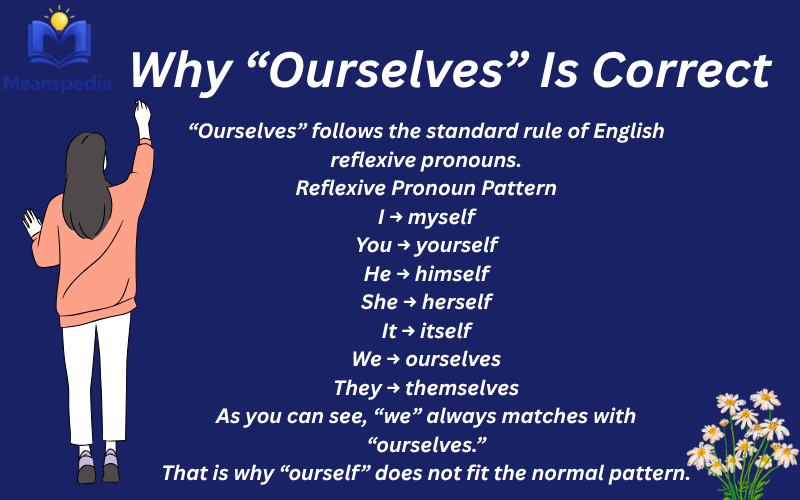
“Ourselves” follows the standard rule of English reflexive pronouns.
Reflexive Pronoun Pattern
- I → myself
- You → yourself
- He → himself
- She → herself
- It → itself
- We → ourselves
- They → themselves
As you can see, “we” always matches with “ourselves.”
That is why “ourself” does not fit the normal pattern.
When Is “Ourself” Used?
“Ourself” is used only in very limited situations.
Rare Uses
- Formal or royal speech
- Old English writing
- Poetic language
- When “we” is used as singular (royal “we”)
Example
- The king says, “We will defend ourself.”
This is called the royal “we”, where one person uses “we” to sound formal.
In modern English, this usage is extremely rare.
Examples of Ourselves in Sentences
Here are some clear examples of correct usage.
| Sentence | Explanation |
| We enjoyed ourselves at the party | Correct reflexive use |
| We prepared ourselves for the test | Same subject and object |
| We helped ourselves to some food | Action done by same group |
| We introduced ourselves to the teacher | Correct plural pronoun |
Common Mistakes People Make
Many learners confuse ourselves and ourself.
Mistakes
❌ We enjoyed ourself
❌ We taught ourself English
❌ We prepared ourself
Correct Forms
✔ We enjoyed ourselves
✔ We taught ourselves English
✔ We prepared ourselves
The mistake usually happens because people try to match “self” instead of using correct plural form.
Why This Confusion Happens
There are several reasons why people get confused.
Reasons
- Similar spelling
- Lack of grammar knowledge
- Influence of spoken English
- Translation from other languages
- Overthinking grammar rules
Understanding reflexive pronouns helps avoid this confusion.
Related Post: Correct Or Correctly Meaning, Difference, and Usage Explained
Ourselves in Everyday English
“Ourselves” is used frequently in daily communication.
Common Situations
- Conversations
- Writing
- Emails
- School work
- Professional communication
It is the correct and standard form in all these contexts.
Ourself in Modern English
“Ourself” is rarely used in modern English.
Where You Might See It
- Historical texts
- Literature
- Poetry
- Formal speeches
In everyday English, it is almost never used.
Grammar Rule Summary
Use “Ourselves”
- With “we”
- In plural context
- In all modern writing
Avoid “Ourself”
- Not standard usage
- Only in rare contexts
Advanced Explanation
In grammar, reflexive pronouns must match the subject in number.
“We” is plural, so it requires a plural reflexive pronoun, which is “ourselves.”
“Ourself” would imply a singular form, which does not match “we.”
That is why it is grammatically incorrect in most cases.
Similar Pronoun Comparisons
| Subject | Reflexive Pronoun |
| I | myself |
| You | yourself |
| He | himself |
| She | herself |
| It | itself |
| We | ourselves |
| They | themselves |
This table shows the correct structure clearly.
Tips to Remember
- Always match “we” with “ourselves”
- Avoid using “ourself” in normal sentences
- Think of plural vs singular
- Follow standard grammar patterns
“If you would like to see more articles like this, here they are.”
- Correct Or Correctly Meaning, Difference, and Usage Explained
- Resetted or Reset Which Is Correct and When to Use It?
- Northeast vs North East Difference, Meaning, and Usage
- Segway vs Segue Meaning, Difference, and How to Use Them
- Persue or Pursue Correct Spelling, Meaning and Usage
FAQs
Which is correct, ourselves or ourself?
“Ourselves” is correct in standard English.
Is ourself ever correct?
Yes, but only in rare or formal contexts.
Why is ourself incorrect?
Because it does not match the plural subject “we.”
Can I use ourself in modern English?
It is not recommended.
What type of word is ourselves?
It is a reflexive pronoun.
What is the difference between ourselves and ourself?
“Ourselves” is correct and common, while “ourself” is rare and outdated.
Is ourselves formal or informal?
It is used in both formal and informal English.
Why do people use ourself?
Due to confusion or lack of grammar knowledge.
Is ourself used in British English?
Very rarely, mostly in historical or formal contexts.
How can I remember the correct usage?
Always use “ourselves” with “we.”
Related Post: Resetted or Reset Which Is Correct and When to Use It?
Conclusion
The difference between ourselves or ourself is simple once you understand the grammar rules. “Ourselves” is the correct reflexive pronoun used with “we” in modern English, while “ourself” is outdated and rarely used. Most grammar guides and language experts recommend always using “ourselves” in both spoken and written communication. This ensures clarity, correctness, and professionalism in your language.
By learning the correct usage of ourselves and avoiding common mistakes, you can improve your English skills and communicate more effectively. Whether you are writing an essay, sending a message, or speaking in conversation, using “ourselves” correctly will help you sound more natural and confident. Understanding this small but important difference can make a big impact on your overall grammar accuracy.