
Many English learners feel confused when they use the words felt or feel. Both words come from the same verb, and both are used to talk about emotions, physical sensations, and thoughts. Because they look similar and share the same meaning at a basic level, learners often use them incorrectly.
The confusion about felt or feel mostly happens because English verbs change their form depending on time. Beginners sometimes forget whether they are talking about the present, the past, or an experience that started earlier. As a result, they may say I felt happy now or I feel tired yesterday, which sounds wrong in English.
This article explains felt or feel in very simple and clear English. Every rule is explained step by step, with many examples from daily life. This guide is purely informational and covers meaning, grammar rules, tenses, sentence structures, common mistakes, and practice exercises. By the end, you will clearly understand when to use feel and when to use felt.
Understanding the Verb “Feel”
To understand felt and feel, we must first understand the base verb feel.
The verb feel is used to talk about:
- emotions (happy, sad, angry)
- physical sensations (cold, pain, tired)
- opinions or thoughts (believe, think)
Examples
- I feel happy.
- She feels tired.
- They feel cold.
- We feel excited.
In all these examples, feel talks about what is happening now or what is generally true.
Verb Forms of “Feel”
The verb feel is an irregular verb.
| Verb Form | Name | Example |
| feel | base / present | I feel happy |
| felt | simple past | I felt happy |
| felt | past participle | I have felt happy |
Important point:
👉 Felt is used for both the past tense and the past participle.
See Also: Taken vs Taking Easy Grammar Difference Explained Simply
What Does “Feel” Mean?
Feel is the present tense form of the verb.
It is used when:
- talking about now
- talking about regular feelings
- talking about general truths
Structure
Subject + feel / feels
Examples
- I feel good today.
- She feels nervous before exams.
- We feel relaxed at home.
- He feels hungry.
When to Use “Feel”
Use feel when:
- the feeling is happening now
- the situation is present
- the feeling is generally true
More Examples
- I feel tired right now.
- She feels proud of her work.
- They feel excited about the trip.
- He feels cold in winter.
“Feel” With Time Words
Common time words used with feel:
- now
- today
- usually
- often
- always
Examples
- I feel happy today.
- She feels nervous now.
- I usually feel sleepy after lunch.
“Feel” With Emotions
Feel is often used to talk about emotions.
Examples
- I feel happy today.
- She feels sad right now.
- They feel excited about the result.
- He feels angry when he waits too long.
“Feel” With Physical Sensations
Feel is also used to talk about the body.
Examples
- I feel cold now.
- She feels pain in her leg.
- He feels tired after work.
- We feel hungry in the morning.
“Feel” With Opinions and Thoughts
Sometimes feel means think or believe.
Examples
- I feel this decision is right.
- She feels the answer is correct.
- We feel the plan will work.
What Does “Felt” Mean?
Felt is the past tense form of feel.
It is used when:
- the feeling happened in the past
- the feeling is finished
- the time is before now
Structure
Subject + felt
Examples
- I felt happy yesterday.
- She felt tired after work.
- They felt nervous before the exam.
- He felt scared during the storm.
When to Use “Felt”
Use felt when:
- the feeling happened earlier
- the time is past
- the feeling is complete
More Examples
- I felt sick last week.
- She felt excited when she won.
- We felt cold in the morning.
- He felt proud after success.
“Felt” With Past Time Words
Common time words used with felt:
- yesterday
- last night
- last week
- earlier
- ago
Examples
- I felt tired yesterday.
- She felt happy last night.
- They felt nervous two hours ago.
Main Difference Between Felt or Feel
| Point | Feel | Felt |
| Tense | Present | Past |
| Time | Now / general | Before now |
| Feeling status | Ongoing | Finished |
| Example | I feel happy | I felt happy |
Easy Rule
- Now → feel
- Past → felt
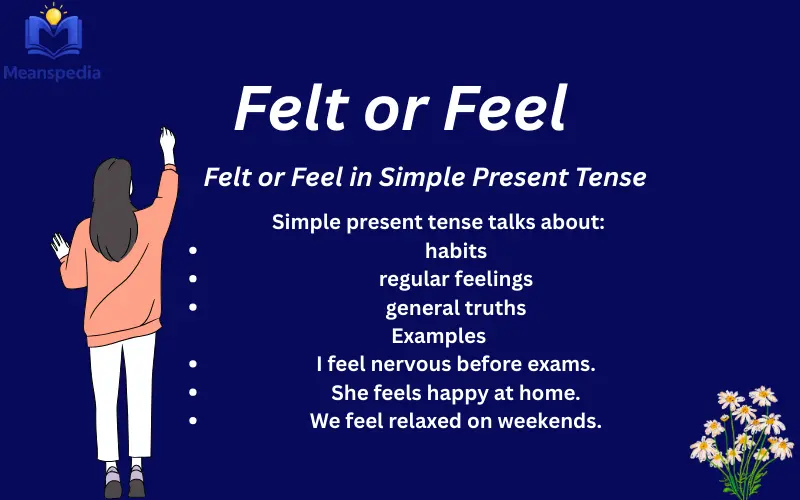
Felt or Feel in Simple Present Tense
Simple present tense talks about:
- habits
- regular feelings
- general truths
Examples
- I feel nervous before exams.
- She feels happy at home.
- We feel relaxed on weekends.
Felt or Feel in Simple Past Tense
Simple past tense talks about:
- completed actions
- past feelings
Examples
- I felt nervous before the interview.
- She felt happy after the news.
- We felt relaxed yesterday.
“Felt” as a Past Participle (Very Important)
Felt is also used as a past participle with helping verbs.
Helping Verbs
- have
- has
- had
Structure
have / has / had + felt
Examples
- I have felt tired today.
- She has felt nervous all day.
- They had felt excited before the trip.
Felt or Feel in Present Perfect Tense
Present perfect tense talks about:
- experiences
- actions connected to now
Examples
- I have felt better today.
- She has felt sad lately.
- We have felt proud many times.
Felt or Feel in Questions
Present Questions
- How do you feel today?
- Do you feel okay?
Past Questions
- How did you feel yesterday?
Answer: I felt fine.
Felt or Feel in Negative Sentences
Present
- I do not feel well.
- She does not feel happy.
Past
- I did not feel good yesterday.
- She did not feel comfortable.
Important:
👉 After did not, always use feel, not felt.
Felt or Feel With “Very” and Adverbs
Examples
- I feel very happy today.
- She felt very tired last night.
- He feels extremely excited.
- They felt deeply sad.
Felt or Feel in Passive Voice
“Feel” is not common in passive voice, but felt can appear.
Example
- The pain was felt by everyone.
Common Mistakes Learners Make
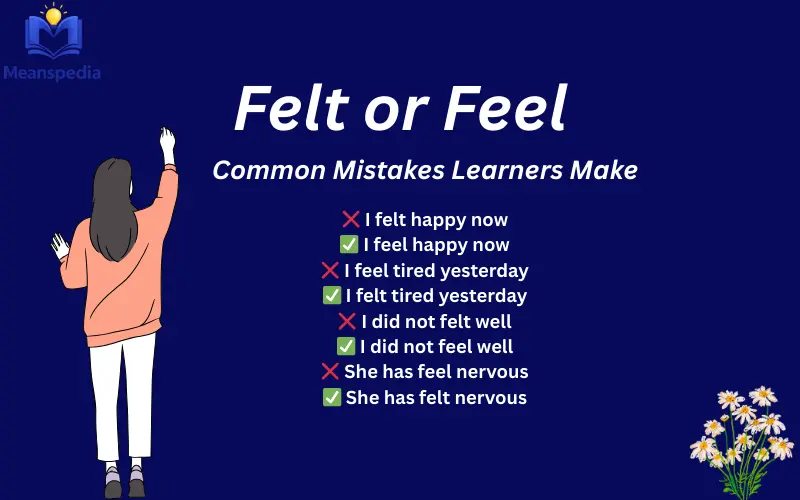
❌ I felt happy now
✅ I feel happy now
❌ I feel tired yesterday
✅ I felt tired yesterday
❌ I did not felt well
✅ I did not feel well
❌ She has feel nervous
✅ She has felt nervous
Very Simple Rules for Beginners
- Talking about now → feel
- Talking about past → felt
- After have / has / had → felt
- After did not → feel
Practice Exercises
Choose the correct word:
- I ___ happy today. → feel
- I ___ happy yesterday. → felt
- She has ___ tired all day. → felt
- How do you ___ now? → feel
- He ___ nervous before the exam. → felt
- They do not ___ well today. → feel
- We had ___ excited before the trip. → felt
- I usually ___ sleepy after lunch. → feel
- She ___ proud when she won. → felt
Why Learning Felt or Feel Is Important
Understanding felt or feel helps learners:
- speak correct English
- write clear sentences
- avoid grammar mistakes
- improve exam results
- build confidence
See Also: Gluing vs Glueing Correct Spelling Explained Simply
Conclusion
The difference between felt and feel is simple and based on time. Feel is used for present situations, general feelings, and habits. Felt is used for past feelings and is also the past participle used with helping verbs like have and had.
Once learners understand this time difference and practice with examples, choosing between felt or feel becomes easy. Correct use of these words improves both spoken and written English and helps learners communicate clearly and confidently.