
Many people who learn English feel confused when they see sentences like “if he was late” and “if he were late.” This confusion about if he was or if he were happens because both sentences look correct, both use past forms, and both talk about the same person. Because of this, learners often do not know which option is grammatically correct and which one sounds more natural in English.
This confusion becomes bigger because native English speakers sometimes use if he was in daily conversation, while grammar books and teachers often say if he were is correct. When learners hear different forms used by different people, they feel unsure and afraid of making mistakes.
This article explains if he was or if he were in very simple English. Every rule is explained step by step, with easy language, clear logic, and many examples. This guide covers beginner rules, advanced grammar, real-life usage, formal and informal English, common mistakes, and practice exercises. By the end, you will fully understand when to use if he was and when to use if he were.
Understanding the Verb “To Be”
To understand this topic, we must first understand the verb to be, because was and were are forms of this verb.
The verb to be changes based on time and subject.
Present Forms
- I am
- he / she / it is
- we / you / they are
Past Forms
- I was
- he / she / it was
- we / you / they were
Normally, he uses was in the past. But in some special grammar situations, were is used instead. This is where confusion starts.
What the Word “If” Does in a Sentence
The word if is used to:
- talk about conditions
- imagine situations
- talk about causes and results
- talk about things that may or may not be true
Examples
- If it rains, I will stay home.
- If he studies, he will pass.
When if is used, the sentence may talk about:
- real situations
- possible situations
- imaginary situations
The meaning of the sentence decides whether we use was or were.
See Also: Flew or Flown Simple Difference Explained With Easy Examples
What Does “If He Was” Mean?
If he was is used when we talk about:
- real situations
- possible situations
- things that may have happened
It is used in the indicative mood, which talks about facts or possible facts.
Structure
If + he + was
Examples
- If he was tired, he went to bed early.
- If he was at home, he saw the message.
- If he was angry yesterday, he is calm now.
In these sentences, the speaker believes the situation could be true.
When to Use “If He Was”
Use if he was when:
- talking about a real past situation
- checking or guessing a fact
- the speaker is not imagining
More Examples
- If he was sick last week, he should see a doctor.
- If he was present at the meeting, he knows the plan.
- If he was the driver, he remembers the accident.
Here, the speaker thinks the situation may be real.
“If He Was” With Past Time Words
When past time words are used, was is usually correct.
Examples
- If he was late yesterday, he missed the bus.
- If he was tired last night, that explains his mood.
- If he was there two hours ago, he heard the news.
Past time words make the situation real and factual.
What Does “If He Were” Mean?
If he were is used for:
- imaginary situations
- unreal conditions
- things that are not true
This form belongs to the subjunctive mood.
The subjunctive mood is used to talk about:
- dreams
- wishes
- unreal conditions
- impossible situations
Understanding the Subjunctive Mood (Very Easy)
The subjunctive mood is special because:
- it does not follow normal tense rules
- were is used for all subjects
So even with he, were is used.
Example
- If he were taller, he would play basketball.
He is not taller. The speaker knows this. That is why were is used.
When to Use “If He Were”
Use if he were when:
- the situation is not real
- the speaker knows it is false
- the speaker is imagining
Examples
- If he were rich, he would buy a big house.
- If he were here, he would help us.
- If he were older, he would understand this.
All these situations are imaginary.
Main Difference Between If He Was or If He Were
| Point | If he was | If he were |
| Situation | Real or possible | Unreal or imaginary |
| Grammar mood | Indicative | Subjunctive |
| Time | Often past | Present imagination |
| Truth | May be true | Not true |
| Example | If he was late | If he were rich |
Very Easy Memory Rule
- Might be true → was
- Not true → were
This one rule helps most learners.
If He Was in Real Conditional Sentences
Real conditional sentences talk about things that happened or could have happened.
Examples
- If he was busy, he did not answer.
- If he was tired, he rested.
- If he was confused, he asked questions.
These sentences talk about real situations.
If He Were in Unreal Conditional Sentences
Unreal conditionals talk about imaginary situations.
Examples
- If he were busy, he would not answer.
- If he were tired, he would rest now.
- If he were confused, he would ask questions.
These situations are not happening.
If He Was or If He Were in Wishes
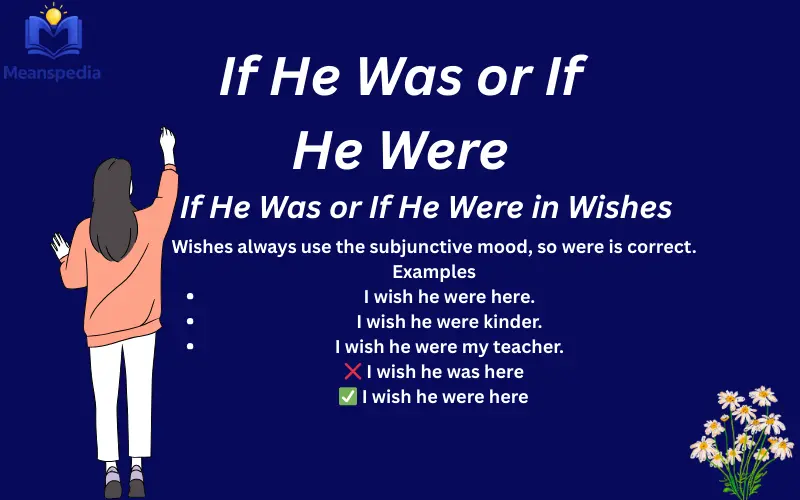
Wishes always use the subjunctive mood, so were is correct.
Examples
- I wish he were here.
- I wish he were kinder.
- I wish he were my teacher.
❌ I wish he was here
✅ I wish he were here
If He Was or If He Were in Formal English
In formal writing:
- were is preferred
- grammar rules are followed strictly
Example
- If he were responsible, this problem would not exist.
If He Was in Informal Spoken English
In daily spoken English:
- native speakers often say was
- grammar rules are relaxed
Example
- If he was here, he would help.
This is common in speech, but were is still grammatically correct.
If He Was or If He Were in Questions
- Was he tired? If he was, let him sleep.
- Would he help? If he were here, he would.
Questions often repeat the same structure.
Common Mistakes Learners Make
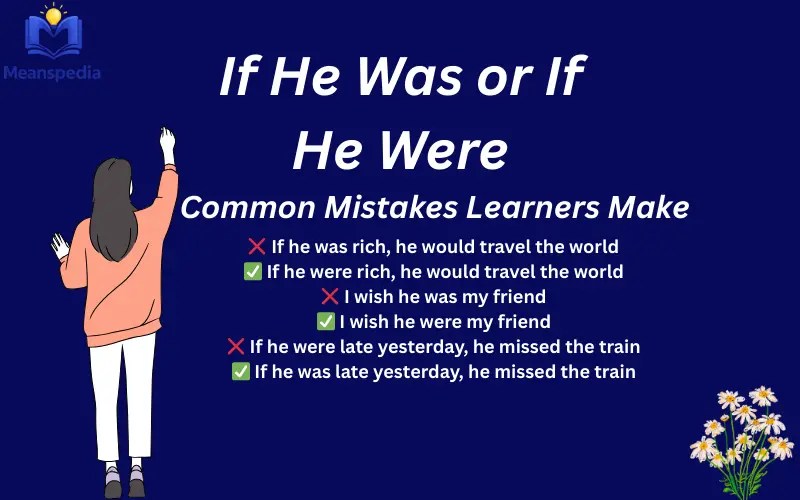
❌ If he was rich, he would travel the world
✅ If he were rich, he would travel the world
❌ I wish he was my friend
✅ I wish he were my friend
❌ If he were late yesterday, he missed the train
✅ If he was late yesterday, he missed the train
Why Native Speakers Sometimes Use “Was”
Native speakers often:
- speak quickly
- use informal grammar
- focus on meaning, not rules
This is why learners hear if he was even in unreal situations. But for exams, writing, and formal English, were is safer.
If He Was or If He Were in Exams
In grammar tests:
- were is expected in imaginary situations
- was is expected in real past situations
Using the correct form improves scores and accuracy.
Practice Exercises
Choose the correct option:
- If he ___ tired yesterday, he slept early. → was
- If he ___ rich, he would buy a car. → were
- I wish he ___ here now. → were
- If he ___ angry earlier, he is calm now. → was
- If he ___ the manager, things would change. → were
- If he ___ present at the meeting, he knows the answer. → was
- I wish he ___ more careful. → were
Why Learning This Rule Is Important
Understanding if he was or if he were helps learners:
- avoid grammar mistakes
- write correct English
- sound confident
- understand formal grammar
- improve spoken and written skills
See Also: Here Is or Here Are Simple Difference With Easy Examples
Conclusion
The difference between if he was and if he were depends on reality. If he was is used for real or possible situations, especially in the past. If he were is used for imaginary, unreal, or hypothetical situations and follows the subjunctive mood.
Once learners understand this simple idea, choosing between if he was and if he were becomes easy. With practice, this grammar point feels natural and improves overall English communication.